
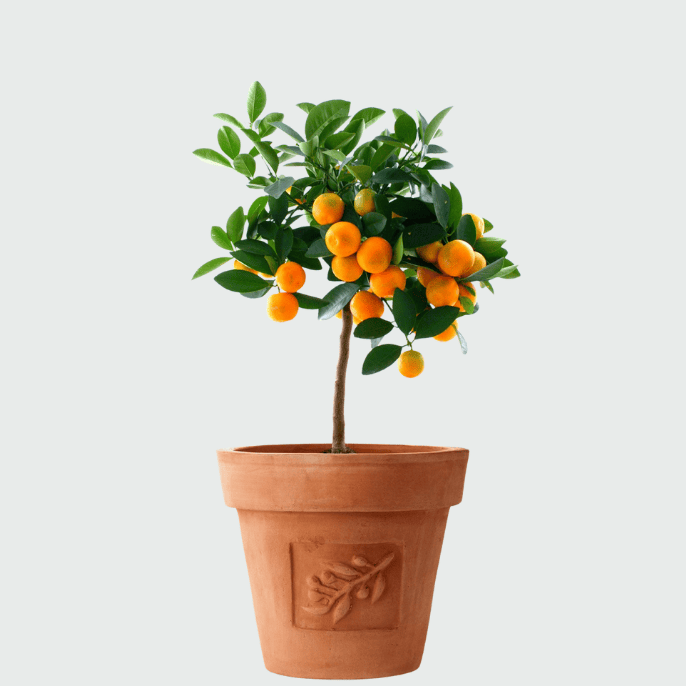
Popular Orange Varieties
| Variety | Best for | Notes |
|---|---|---|
| Malta | Fresh eating and juice | Sweet, familiar flavour |
| Valencia | Juicing | Late-season, very juicy fruit |
| Navel | Fresh eating | Seedless and easy to peel |
| Calamondin | Pots and decoration | Compact tree with small, tangy fruit |
Consider your space and purpose first. Larger trees need open ground, whereas compact types do well on terraces and balconies.
Planting in Four Steps
- Pick a sunny spot: The tree needs six to eight hours of direct sun daily.
- Prepare the soil: Use well-draining, slightly acidic sandy loam. For pots, choose a large container with drainage holes and a citrus potting mix.
- Set the plant: Keep the root ball level with, or slightly above, the soil surface.
- Water deeply: This settles the roots and removes air pockets.
Care Through the Year
Water deeply, then let the top few inches of soil dry before the next session, since soggy soil causes root rot. Feed with a citrus fertilizer containing iron and zinc three to four times a year. In addition, prune dead wood and suckers to improve airflow and light. During frosty nights, cover young plants with cloth, and move potted trees to a bright, sheltered spot.
Flowering and Harvest
Most orange varieties are self-pollinating, so one tree can fruit on its own, and visiting bees help the process. A grafted sapling usually fruits sooner than one grown from seed, although young trees still need a few years of patience. Harvest in winter or early spring once the fruit is fully coloured and feels heavy. Oranges do not ripen further after picking, so wait until they are ready. Use clippers or a gentle twist to protect the peel and branches.
Order from Hani Plants
Each plant is packed carefully for delivery across Pakistan, so it arrives ready for planting. Browse more fruit plants at Hani Plants and add an orange tree to your garden today.


Reviews
There are no reviews yet.