
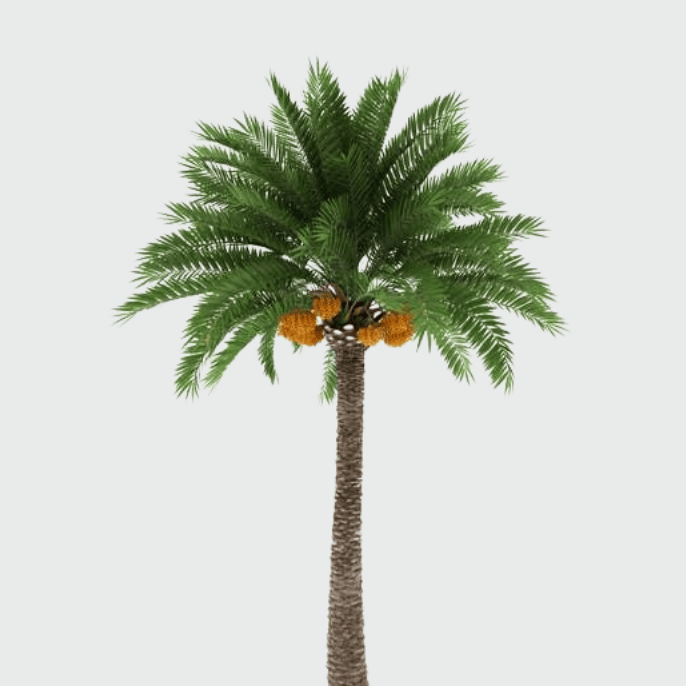

Phoenix palm is a popular ornamental tree known for its graceful, feather-like fronds and strong trunk. It thrives in warm climates with full sunlight and well-drained soil. This palm requires moderate watering and occasional fertilization. Its elegant appearance makes it ideal for gardens, patios, and landscapes. With proper care, Phoenix palm adds lasting tropical beauty to any space.
How to Care for Phoenix palm
Phoenix palm grows best in full sunlight and well-drained soil. Water the plant regularly but avoid overwatering to prevent root rot. Additionally, apply balanced fertilizer during the growing season for healthy growth. Remove dry or damaged leaves to maintain its appearance. Proper care helps the Phoenix palm grow strong, green, and attractive.
Sunlight Requirements
Phoenix palm grows best in full sunlight. It needs at least six to eight hours of direct sun daily. Proper sunlight promotes strong growth, healthy leaves, and a vibrant green appearance.
Watering Requirements
Phoenix palm needs moderate watering for healthy growth. Water deeply when the top soil feels dry. However, avoid overwatering, as excess moisture can cause root rot and damage the plant.
Best Soil for Phoenix palm Growth
Phoenix palm thrives in well-drained, sandy or loamy soil. Adding organic compost improves nutrients and drainage, supporting strong roots and healthy, lush green foliage for long-lasting growth.
Fertilizer Requirements
Phoenix palm benefits from balanced fertilizer rich in nitrogen, potassium, and magnesium. Apply during spring and summer to promote healthy leaf growth, strong roots, and vibrant, lush green fronds.
Pruning and Maintenance Tips
Regularly remove dry, yellow, or damaged leaves from Phoenix palm. Avoid over-pruning. Proper maintenance improves air circulation, promotes healthy growth, and keeps the palm looking neat, vibrant, and strong.
Temperature and Climate Needs
Phoenix palm thrives in warm, tropical, and subtropical climates. It tolerates heat well but is sensitive to frost. Protect young palms from cold to ensure healthy growth and vibrant foliage.
Pest and Disease Management
Phoenix palms can attract scale insects, spider mites, and fungal infections. Regular inspection, proper watering, and natural insecticides like neem oil help prevent damage and maintain healthy, vibrant growth.
Growing Phoenix palm in Pots
Phoenix palms grow well in large, well-drained pots. Use sandy or loamy soil, provide adequate sunlight, and water moderately. Regular fertilization ensures healthy growth and vibrant, decorative foliage.


Reviews
There are no reviews yet.