
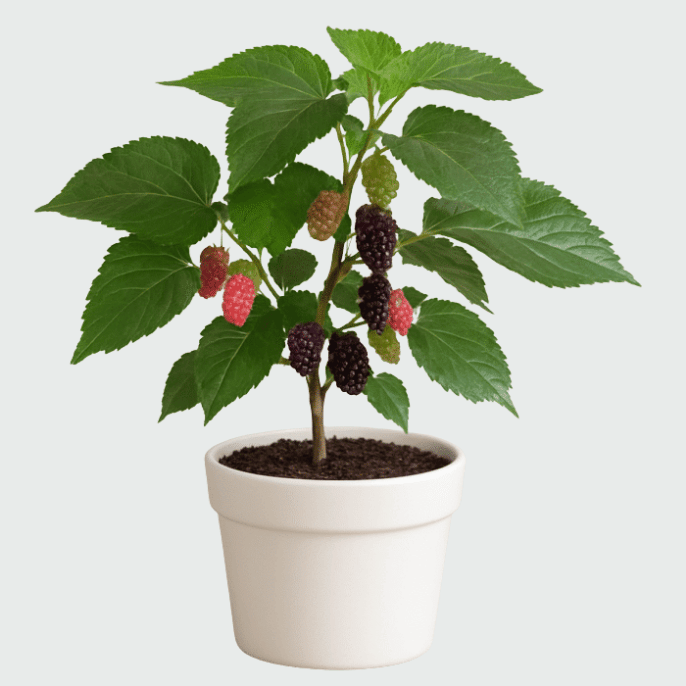
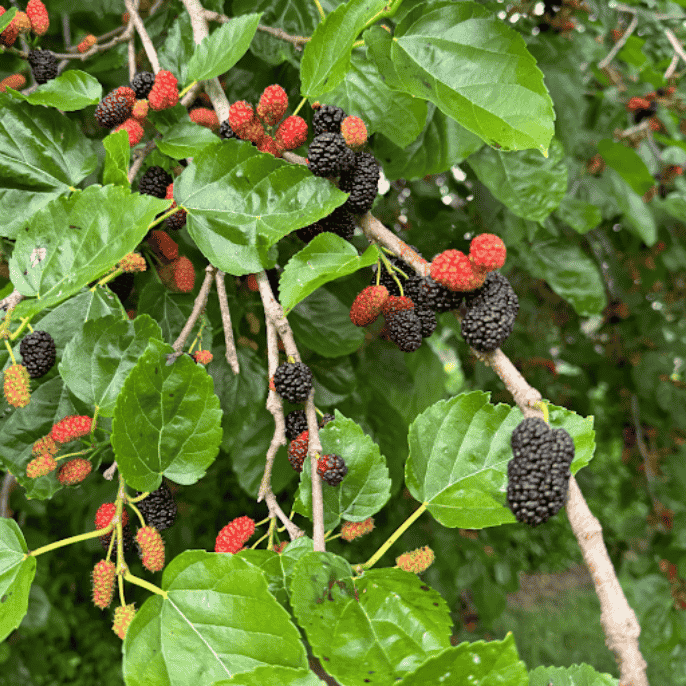
Shahtoot, also known as the Outdoor Mulberry tree, is a popular fruit tree admired for its sweet and juicy berries. It grows well in warm and temperate climates and adapts easily to different soils. Moreover, the tree provides shade and attracts birds to gardens. Mulberry fruit is rich in vitamins, antioxidants, and fiber, making it both delicious and nutritious.
Types of Shahtoot | Mulberry Tree
Several mulberry varieties grow around the world. However, three types dominate most gardens and farms.
White Mulberry (Morus alba) grows quickly and produces sweet light-colored fruit. Moreover, farmers often plant it for silkworm cultivation.
Black Mulberry (Morus nigra) produces dark, juicy berries with rich flavor. Therefore, gardeners prefer it for home fruit production.
Red Mulberry (Morus rubra) grows naturally in forests and rural landscapes. Additionally, it produces tasty berries and provides shade.
Each variety grows differently. However, all mulberry trees remain easy to manage and productive.
Health Benefits of Shahtoot Fruit
Shahtoot berries contain many important nutrients. Therefore, they support overall health and wellness.
First, mulberries provide vitamin C and iron. Consequently, they help improve immunity and blood health.
Additionally, the fruit contains antioxidants that fight harmful free radicals. As a result, they help protect body cells.
Mulberries also contain fiber. Therefore, they support healthy digestion and gut function.
Furthermore, the fruit contains natural compounds that help manage blood sugar. Meanwhile, many people enjoy mulberry juice for energy and hydration.
Regular consumption of Shahtoot fruit promotes better health. Moreover, it offers a natural alternative to sugary snacks.
Best Soil for Shahtoot | Mulberry Tree Growth
Mulberry trees grow in many soil types. However, fertile and well-drained soil produces the best results.
Loamy soil supports strong root development. Additionally, it allows proper drainage and nutrient absorption.
Gardeners should avoid waterlogged soil. Otherwise, roots may rot and weaken the plant.
Adding organic compost improves soil fertility. Consequently, the tree grows faster and produces more fruit.
Furthermore, maintaining slightly acidic or neutral soil benefits mulberry growth. Therefore, balanced soil conditions support healthy trees.
How to Plant a Mulberry Tree
Planting a Shahtoot tree requires simple steps. However, proper planting ensures faster establishment.
First, select a sunny location with open space. Next, dig a hole larger than the root ball.
Place the sapling carefully into the hole. Then fill it with soil mixed with compost.
After planting, water the tree thoroughly. Consequently, the roots settle properly into the soil.
Mulberry trees grow quickly during the first years. Therefore, gardeners should provide space for future expansion.
Meanwhile, regular care helps young trees establish strong roots.
Watering and Fertilizing Mulberry Trees
Mulberry trees require moderate watering. However, young plants need consistent moisture.
Water the tree once or twice weekly during dry weather. Meanwhile, mature trees tolerate short dry periods.
Organic fertilizers improve growth and fruit production. Therefore, gardeners often use compost or manure.
Apply fertilizer during spring for best results. Additionally, repeat feeding during the growing season.
Proper nutrition encourages healthy branches and abundant berries. Consequently, the tree becomes more productive each year.
Pruning and Maintenance
Pruning helps maintain the shape and health of mulberry trees. Therefore, gardeners trim weak or damaged branches.
Winter pruning encourages stronger growth in spring. Meanwhile, removing crowded branches improves air circulation.
Additionally, pruning increases sunlight exposure within the canopy. As a result, fruit quality improves.
Regular maintenance also prevents disease and pest problems. Consequently, the tree remains healthy and productive.
Common Pests and Diseases
Mulberry trees generally resist many pests. However, occasional issues may appear.
Aphids sometimes attack young leaves and shoots. Therefore, gardeners use natural sprays to control them.
Birds also enjoy mulberry fruit. Consequently, some gardeners use nets to protect ripening berries.
Fungal diseases may appear in humid conditions. However, proper airflow reduces infection risk.
Regular monitoring keeps the tree healthy. Moreover, early treatment prevents serious damage.
Uses of Mulberry Tree
Mulberry trees offer many valuable uses. First, the berries provide delicious fresh fruit.
People also prepare jams, juices, and desserts using mulberries. Additionally, dried berries serve as nutritious snacks.
Mulberry leaves support silkworm farming. Therefore, the tree plays an important role in silk production.
Furthermore, the tree provides shade in gardens and parks. Meanwhile, its attractive foliage enhances landscapes.
Wood from mulberry trees also serves small craft uses. Consequently, the tree offers both economic and environmental benefits.


Reviews
There are no reviews yet.