
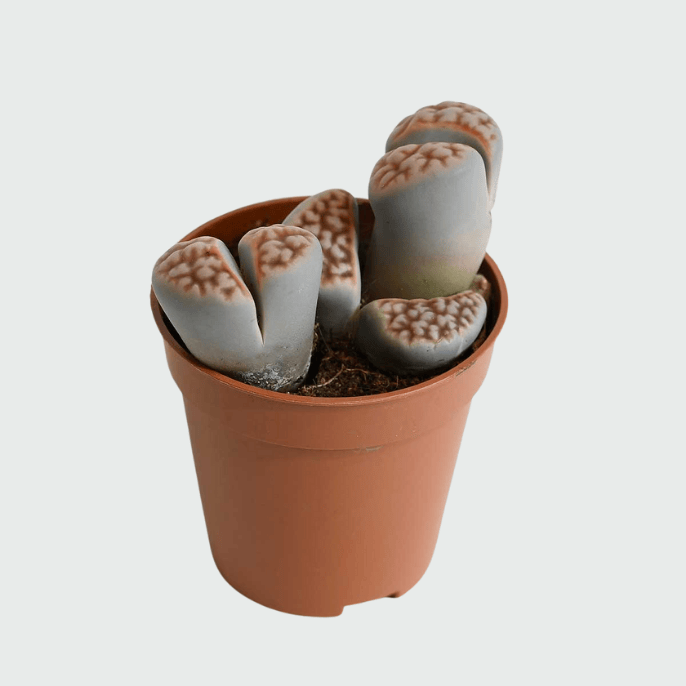
Introduction to Living Stones
Living Stones, scientifically known as Lithops, are unique succulents admired for their fascinating stone-like appearance. These plants naturally blend into their surroundings as a survival strategy, making them an eye-catching choice for collectors and indoor gardeners. Their unusual form and compact growth habit make Lithops ideal for small spaces, decorative pots, and minimalist plant displays.
Origins and Natural Habitat
Living Stones originate from the arid regions of southern Africa, where they have adapted to extreme heat and limited rainfall. In their native habitat, they grow among rocks and gravel, using their camouflaged shape to avoid being eaten by herbivores. This adaptation helps them store water efficiently and withstand long periods of drought. Their environment has shaped their care needs, making them low-maintenance but sensitive to overwatering.
Appearance and Growth Pattern
One of the most striking features of Living Stones is their two thick, fused leaves that resemble small pebbles. These leaves split to reveal new growth, creating a slow but captivating transformation. Colors vary from grey and brown to green and pink, often marked with intricate patterns. In the fall, Lithops may produce daisy-like flowers that add a delicate touch to their rugged look.
Care Requirements
Caring for Living Stones requires understanding their natural rhythm. They prefer bright, indirect sunlight and minimal watering. During their growing season, watering should be light, allowing the soil to dry completely between each session. In their dormant phase, water should be reduced or stopped entirely. A well-draining soil mix, preferably designed for cacti and succulents, prevents root rot and supports healthy growth.
Uses and Decorative Appeal
Because of their compact size and interesting textures, Living Stones are perfect for small pots, terrariums, and indoor displays. They bring a unique artistic element to plant collections and make great conversation starters due to their deceptive, stone-like appearance.


Reviews
There are no reviews yet.