
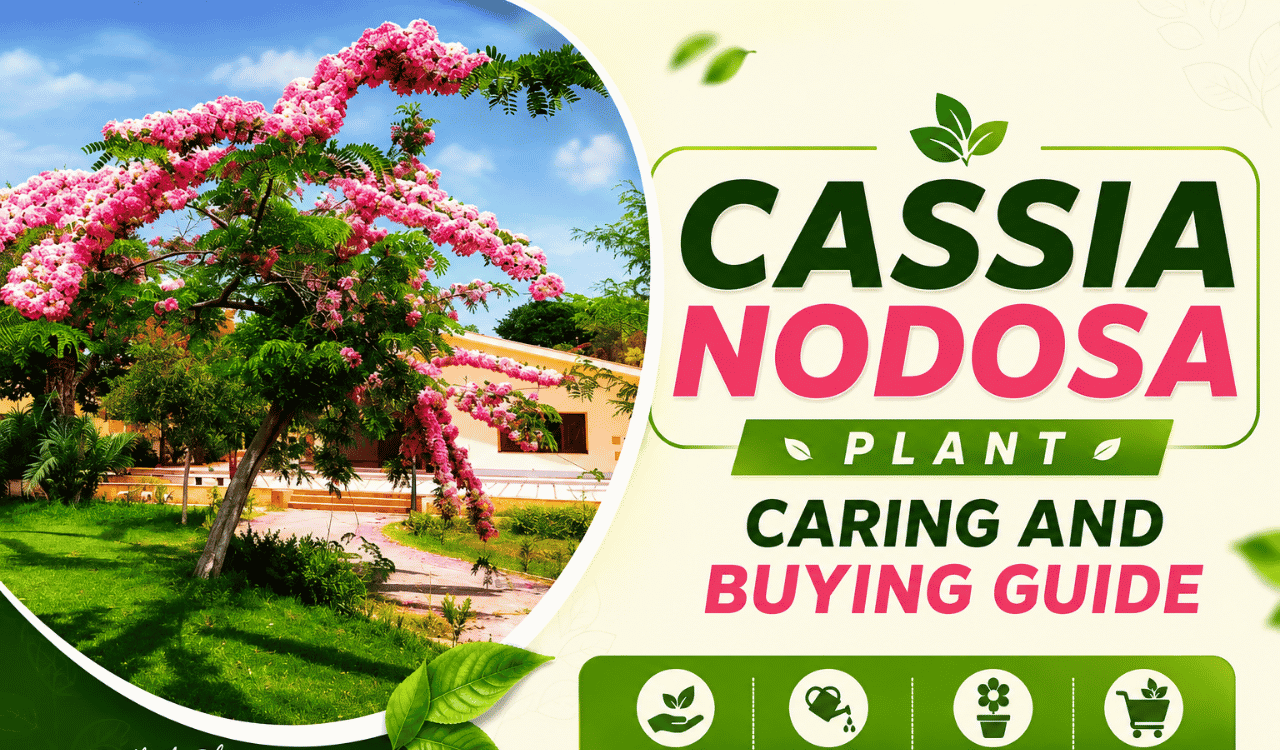
Cassia nodosa plant, also known as the Pink Shower Tree or Apple Blossom Tree, delivers a spectacular floral show that few other trees can match. Home gardeners across Pakistan are discovering this stunning ornamental, and for good reason. Its clusters of soft pink blossoms appear even before the leaves return in spring, creating a canopy that looks like something out of a painting. If you’re considering adding one to your garden, you need to understand its specific needs first. This guide covers everything from planting to pruning, plus what you should expect to pay for a healthy specimen in Pakistan.
Getting to Know the Cassia Nodosa Tree
The cassia nodosa tree is a member of the legume family and is a close relative of the more famous Cassia fistula, India’s national tree. You might hear people refer to it as Cassia javanica in botanical circles. The name confusion happens because the two are often treated as the same species in nurseries, even though they have distinct characteristics. For most gardeners, the difference matters less than the tree’s performance in their soil and climate.
Many people ask about the common name of the cassia nodosa plant when they’re searching for this tree at local nurseries. In Pakistan, it’s usually called Pink Shower, Apple Blossom, or simply “Gul-e-Neelam” in Urdu. Ask for any of these names, and most nursery owners will know what you mean.
The cassia nodosa flower production typically happens between March and May in Pakistani conditions. During the cassia nodosa flowering season, the tree sheds its leaves partially or completely, then produces masses of pink blooms that hang in clusters from the branches. The visual impact lasts for several weeks, after which the tree develops long, cylindrical seed pods that remain on the branches through the summer.
This tree is not a small shrub. Mature specimens can reach 30 to 40 feet in height with a spreading canopy that provides generous shade. That makes it an excellent choice for larger gardens, parks, and street plantings. If you have a compact urban garden, you might want to look for a smaller ornamental instead.
How to Grow and Care for Cassia Nodosa
Growing a healthy Cassia nodosa plant requires attention to a few specific conditions. Get these right, and the tree rewards you with decades of reliable blooms.
Sunlight and Location
The tree needs full sun to perform at its best. You should plant it where it receives at least six to eight hours of direct sunlight daily. Too much shade leads to sparse foliage and reduced flowering. Because the mature canopy spreads wide, give it plenty of space. A spot away from buildings and power lines is essential.
Soil and Watering
Well-draining soil is non-negotiable. Cassia nodosa plant care starts with soil that doesn’t hold standing water around the roots. Sandy loam with good organic content works well. The tree tolerates a range of soil pH levels, but slightly acidic to neutral soil produces the healthiest growth.
Water deeply once or twice a week during the first year after planting. This helps the roots develop and become firmly established. After that, the tree becomes fairly drought-tolerant, though it performs better with occasional watering during extended dry spells. Overwatering is a common mistake. The roots will rot if they sit in soggy soil.
Fertilizer and Pruning
Apply a balanced fertilizer in early spring, just before new growth begins. A fertilizer with equal levels of nitrogen, phosphorus, and potassium provides balanced nutrition for healthy plant growth. You can also add well-rotted manure or compost around the base of the tree in late winter.
Pruning requirements are minimal. Remove dead or damaged branches in late winter before the flowering season begins. Light shaping keeps the canopy balanced, but avoid heavy pruning because it can reduce the following season’s blooms. The tree also drops its leaves before flowering, so don’t worry when you see leaf fall in early spring. That’s normal behavior.
Common Pests and Diseases
Watch for aphids and scale insects, which sometimes appear on young growth. You can control them with neem oil spray or insecticidal soap. Root rot is the biggest disease risk, and it stems from poor drainage. Ensure your planting site drains well, and you’ll avoid most problems. Leaf spot fungi can occur in humid conditions, but they rarely cause serious damage to established trees.
Where to Find Cassia Nodosa and What It Costs in Pakistan
Finding a Cassia nodosa for sale in Pakistan requires a bit of searching, but the tree has grown in popularity among landscape enthusiasts. Large nurseries in major cities carry it, particularly those that specialize in ornamental trees. You can also check with landscape contractors (Available) and garden suppliers who source trees for parks and commercial projects.
Cassia Nodosa Price in Pakistan
According to current nursery listings and dealer rates, the cassia nodosa price in Pakistan varies based on the tree’s age and size:
- Small plants (1 to 2 feet): around PKR 300 to PKR 800
- Medium trees (3 to 5 feet): approximately PKR 1,500 to PKR 3,500
- Large trees (6 feet and above): PKR 4,000 to PKR 8,000 or more
The cassia nodosa price in Lahore tends to be competitive because the city has several large wholesale nurseries. The price in Karachi runs similarly, though you may find slight variations depending on availability and transport costs. In Islamabad, rates are often a bit higher due to the demand for ornamental trees in the capital’s many parks and residential schemes.
When you’re buying, inspect the tree carefully. Look for a straight trunk, healthy foliage, and no signs of pest damage. A well-branched young tree will develop a better canopy than a tall, leggy one. Also ask about the tree’s origin. Locally grown specimens adapt better to Pakistani conditions than imported ones.
The tree grows well in most of Pakistan’s climate zones. It thrives in Punjab, Sindh, and the Potohar region. In colder areas like Murree or northern mountainous regions, it will struggle because it isn’t frost-hardy. If you live in a colder zone, consider keeping the tree in a large container and moving it to a sheltered spot during winter.
Buying Tips
- Buy from reputable nurseries with good reputations for selling healthy plants, like Haniplants.
- Ask when the tree last flowered. That gives you an idea of its health and maturity.
- Check the root ball. Roots should be well-developed but not circling the pot excessively.
- Consider buying in early spring so the tree has time to establish before summer heat arrives.
Conclusion
The cassia nodosa tree is a rewarding addition to any garden large enough to accommodate its spreading canopy. Its spring display of pink blossoms creates a focal point that draws attention from neighbors and passersby alike. With proper planting, adequate sunlight, and consistent care during the establishment phase, this tree thrives in most Pakistani climates and rewards you with years of brilliant seasonal color. Start with a healthy sapling from a reputable nursery, plant it in well-draining soil, and give it room to grow. Your patience will pay off each spring when the branches fill with those unmistakable apple blossom pink flowers.
FAQs
What is the cassia nodosa common name in Pakistan?
Most people call it Pink Shower Tree or Apple Blossom Tree. In Urdu, it’s often referred to as Gul-e-Neelam.
When does the Cassia nodosa flowering season start in Pakistan?
The flowers usually appear between March and May, depending on the local climate. Warmer regions may see blooms earlier.
Can I grow a cassia nodosa plant in a container?
Young trees can live in large containers for several years, but they eventually need to be planted in the ground to reach their full size.
How tall does the tree get?
Mature cassia nodosa trees typically reach 30 to 40 feet in height with a wide, spreading canopy.
Where can I buy a cassia nodosa tree in Pakistan?
Check large nurseries in Pakistan. Online haniplant sellers also list this species from time to time.
Does the tree need full sun?
Yes. Full sun is essential for good flowering. It is best to provide at least six hours of direct sunlight each day for healthy growth.
Is the tree frost-hardy?
No. It is not suited to cold mountainous regions. It grows best in warm climates like those found in most of Punjab and Sindh.
Are there different varieties of Cassia nodosa?
The closely related Cassia javanica is sometimes treated as a synonym. Both are similar in appearance and care requirements.
