
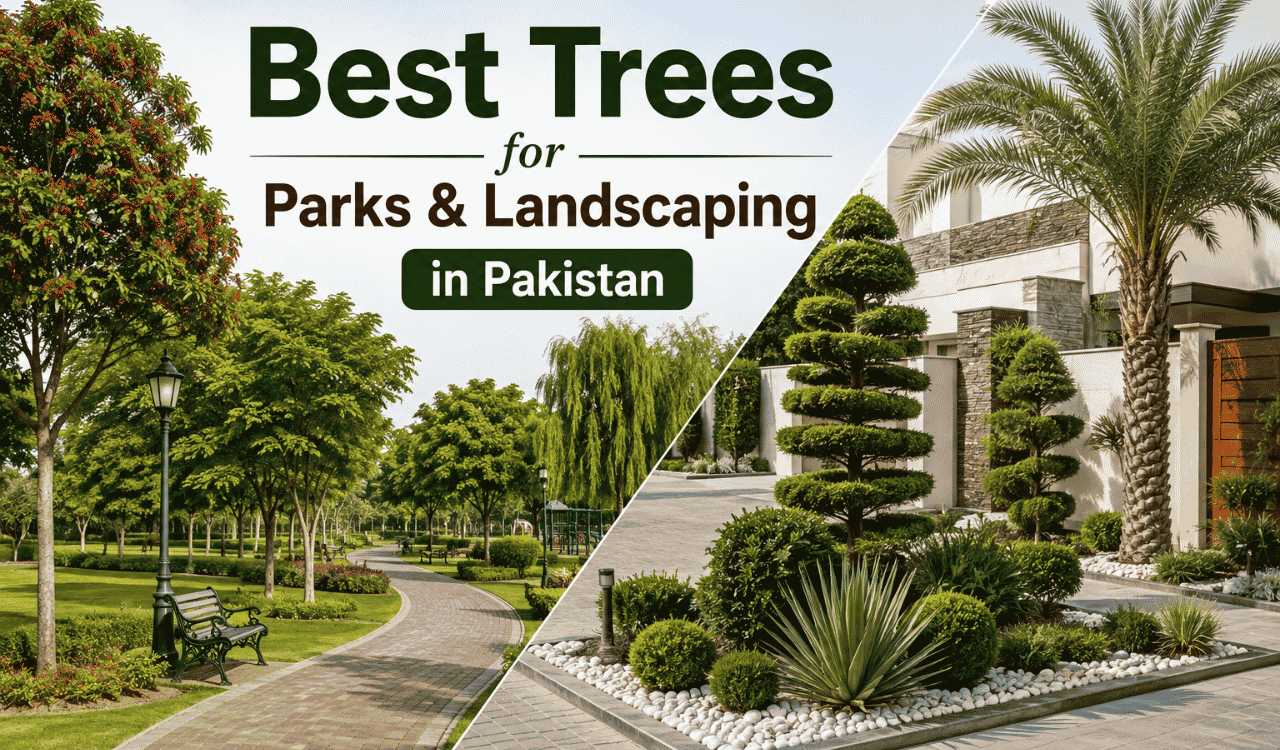
Pakistan isn’t one climate it’s several stitched together. Snow-fed valleys up north, blistering plains through Punjab and Sindh, and a humid coastal belt down south. That’s exactly why “what’s the best tree?” doesn’t have one answer. It depends on where you’re planting, how much room you’ve got, and what job you actually want the tree to do shade for a courtyard, color for a park entrance, or a fast-growing screen to block a busy road. Below is a practical rundown of trees worth considering, region by region, plus a few things landscapers wish more homeowners asked before they bought a sapling.
Find the Best Outdoor Plants at Hani Plants
- Outdoor Plants — gardens, balconies, and outdoor spaces
- Flower Plants — Grow fresh fruits at home
- Trees — Healthy Trees for Parks & Landscaping
- Fruit Plants — Enjoy fresh, homegrown fruit.
Trees That Actually Thrive in Each Climate Zone
Up North: Cold Hills and Mountain Valleys
- Deodar cedar — Pakistan’s answer to a stately evergreen. Slow to grow, but it rewards patience with real presence in large public parks across KP and the northern belt.
- Chir pine — tough, fast, and good at holding soil together on slopes. Also doubles as a timber tree.
- Walnut — gives you fruit and a broad canopy in one package, provided the valley gets consistent rainfall.
The Hot Plains: Punjab and Sindh
- Neem — once it’s established, it barely needs babying. Thick shade, drought resistance, and a long history of medicinal use.
- Sheesham — grows fast, produces strong timber, and has been the go-to roadside avenue tree for generations.
- Peepal — low-maintenance with a huge spreading canopy, but plant it far from foundations and walls; the roots don’t compromise.
Coastal and Humid Areas: Karachi and the South
- Coconut palm — salty air doesn’t bother it, and it brings instant tropical character to seafront parks.
- Gulmohar — loves the heat and puts on a fiery red-orange show, but give it room; this isn’t a tree for a tight courtyard.
- Banyan — eventually becomes a landmark in its own right, spreading wide over decades. Great for sprawling lawns, wrong choice for a small yard.
If there’s one rule that matters more than any other, it’s this: match the species to the local climate first. Native trees drink less water, shrug off local pests, and rarely demand intensive upkeep. Figure out your zone, then pick from what actually belongs there.
Flowering Trees Worth Planning Around
- Amaltas (Cassia fistula) — the national tree, and for good reason. Come May and June, it drapes itself in cascades of gold.
- Jacaranda — a spring showstopper, turning entire avenues purple-blue when it’s in bloom.
- Frangipani — fragrant, compact, and forgiving of tight spaces, which makes it a favorite for home gardens.
- Bottlebrush — its red, brush-shaped flowers pull in birds and pollinators, and it does fine across most low-lying areas.
- Flame tree (Delonix regia) — scarlet blooms that stop people in their tracks, but only if you can spare the space it needs to spread out.
Bloom timing varies a lot between species, so don’t plant just one kind if you want color that lasts. Amaltas peaks in early summer, Jacaranda earlier in spring stagger a few varieties together and a park stays lively across months instead of putting on one short burst and going quiet.
Palm Varieties Most Commonly Used in Pakistan
Palms deserve their own mention because landscapers reach for them constantly, and not just the one coconut variety everyone pictures. A few names come up again and again on both residential and commercial projects:
- Washingtonia palm — the tall, slender palm lining most highways and society entrances in Pakistan. Fast-growing and low-fuss, which is why it’s become the default choice for avenues.
- Date palm (Khajoor / Phoenix dactylifera) — handles heat and drought better than almost anything else on this list, and doubles as a fruiting tree in the right conditions.
- Areca palm — smaller and bushier, used constantly as a privacy screen or a soft green wall along boundaries and driveways.
- Bismarck palm — silvery-blue fan-shaped fronds make it a statement piece; usually planted alone as a focal point rather than in rows.
- Foxtail palm — neat, symmetrical, and increasingly popular in newer housing societies for its tidy, “landscaped” look with minimal maintenance.
- Coconut palm still the top pick for coastal and seafront parks, salt-tolerant and unmistakably tropical.
Most of these share the same trade-off: they’re excellent for structure, symmetry, and that manicured look developers want at entrances and along roads, but they don’t offer much actual shade. Pair them with a proper canopy tree if cooling the space is the real goal, and use palms for the visual line-up instead.
Choosing by Space: What Actually Fits Your Property
Small gardens:
Frangipani, Bottlebrush, or Chinese pistache stay manageable even at full maturity.
Medium-sized yards:
Amaltas, Jacaranda, or Moringa add height and interest without swallowing the whole plot.
Large properties and public parks:
Sheesham, Flame tree, or Banyan are built for scale, filling out into wide canopies over the years.
Working With a Landscaping Service
Most professional landscapers in Pakistan will offer semi-mature trees rather than young saplings. They cost more upfront, but they establish noticeably faster worth it if you don’t want to wait a decade for shade. If you’re planting anywhere near walls, paved paths, or underground pipes, ask specifically about root barriers before anything goes in the ground. And nail down the irrigation plan early; regardless of species, a newly planted tree needs consistent watering for at least its first two years.
Palm Trees for Parks & Landscaping are a nice accent piece in modern designs, especially along the coast they pair well with gravel beds, ornamental grasses, and other low-water planting. Just don’t expect them to carry the shade workload; most palms grow slowly and offer thin canopy cover, so treat them as visual structure, not your main tree.
Before buying anything, check three things: how much sun the spot gets, how well the soil drains, and how much horizontal room you actually have. A tree that looks modest in a nursery pot can easily double or triple its spread within ten years plan for the tree it’s going to become, not the one sitting in front of you today.
Conclusion
Picking the right tree really comes down to three questions: what’s your climate zone, how much space do you have, and what do you actually want the tree to do? Native species like Neem, Sheesham, and Amaltas will reward you with reliable shade and minimal fuss. Flowering trees like Jacaranda and Gulmohar bring seasonal drama that changes how a public space feels. And for smaller gardens, Frangipani or Bottlebrush deliver beauty without turning into a maintenance project down the line. Whether you’re planning a municipal park, sprucing up a home lawn, or working with a landscaping company on something bigger, getting the species right from day one saves years of costly correction later. Do it well, and the landscape stays healthy and good-looking for generations.
Frequently Asked Questions
Q1:Which tree grows fastest in Pakistan?
Sheesham and Chir pine grow fastest, often gaining several feet a year. Washingtonia palm is also quick if you want height fast.
Q2:Can Gulmohar survive in a small home garden?
Not really, it needs a lot of space to spread. Frangipani or Bottlebrush are better for small gardens.
Q3:What’s the best shade tree for a lawn in Lahore?
Neem and Sheesham handle Lahore’s heat well and give dense shade. Peepal works too but needs distance from walls and pipes.
Q4:Are coconut palms suitable for Karachi’s coastal climate?
Yes, they’re well suited to Karachi’s salty, humid coastal air and sandy soil.
Q5:What’s the cheapest ornamental tree for a park project?
Sheesham and Neem are usually the cheapest, with Amaltas a close third for flowering color.
