
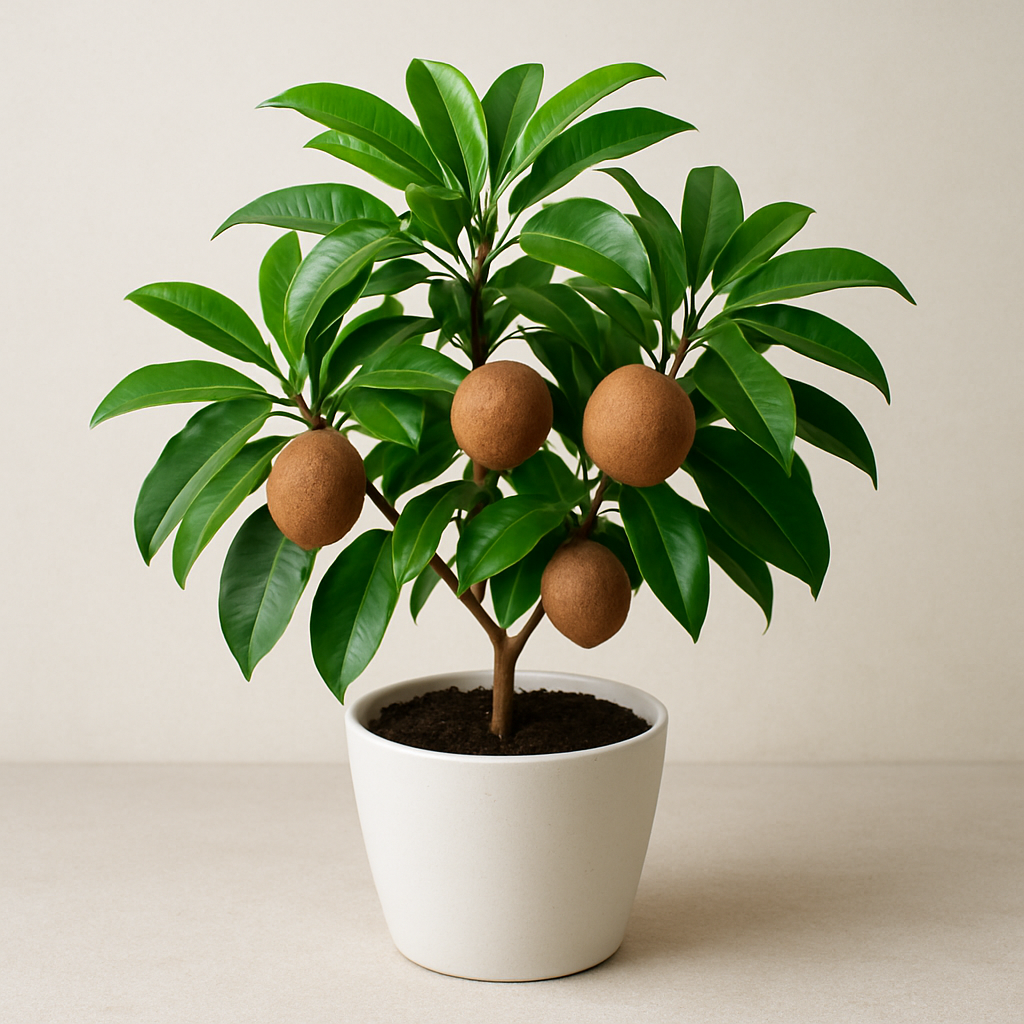
Introducing the Chikoo Plant
The Chikoo plant, botanically known as Manilkara zapota and commonly called Sapodilla, is a prized tropical evergreen tree.People value this fruit for its sweet, malty taste and its brown, grainy flesh that recalls pear and brown sugar. Native to Central America and the Caribbean, it now grows widely in warm-climate home gardens. Besides producing delicious fruit, the Chikoo also serves as an attractive ornamental tree. Its glossy dark-green leaves and manageable growth make it a worthwhile long-term choice for gardeners.
Getting Started: Planting Your Chikoo
Success begins with the right foundation. Chikoo plants require a tropical or subtropical climate and thrive in full sunlight, needing at least 6-8 hours of direct sun daily. They are highly adaptable to various well-draining soil types, including sandy or loamy soils, but cannot tolerate waterlogged conditions. You seldom need heavy pruning, but light trimming to maintain shape and remove dead or crossing branches enhances air circulation and light penetration.
Essential Care for Healthy Growth and Fruit
Once established, Chikoo tree care is relatively undemanding. Watering should be deep and regular for young trees to encourage strong root development. Mature trees are quite drought-tolerant but will produce better fruit with consistent moisture, especially during flowering and fruiting periods. Feeding with a balanced, slow-release fertilizer formulated for fruit trees 2-3 times a year supports steady growth. You may not need heavy pruning, yet light trimming to shape the plant and clear dead or crossing branches boosts air flow and light in the canopy.
Overcoming Common Challenges
Chikoo plants are notably robust and face few serious pest or disease issues, contributing to their “easy care” reputation. Potential pests like scale or fruit flies can be managed with horticultural oils or organic traps. The primary challenge is climate sensitivity; these trees are highly frost-tender. If your area gets occasional cold snaps, use frost cloth or a sheltered site to protect young trees. For growers in containers, this allows for mobility to bring the plant indoors during winter. Patience is also key, as the tree focuses energy on establishing a strong structure before dedicating resources to a significant fruit set.


Reviews
There are no reviews yet.