
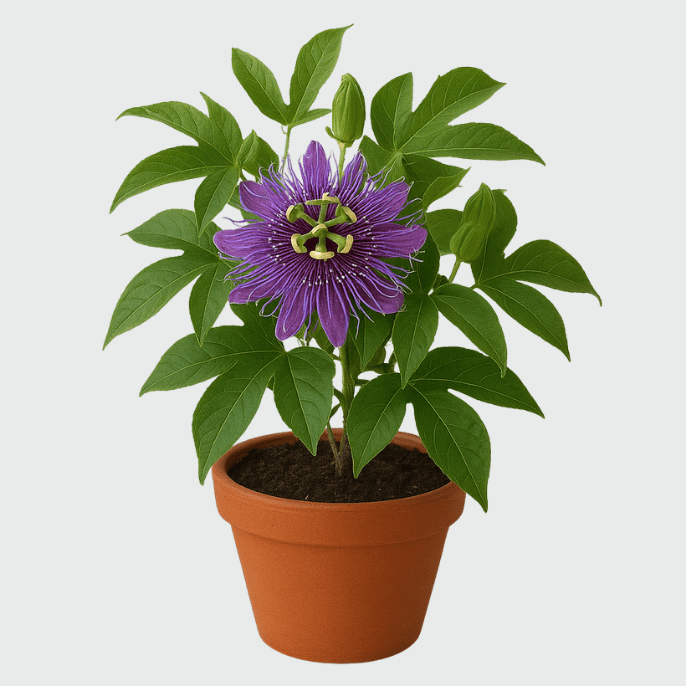
Passiflora incarnata plant, also called purple passionflower, is a stunning flowering vine. It produces unique purple blooms with a striking structure. This plant grows widely in warm climates and attracts pollinators quickly. Moreover, gardeners admire it for both beauty and medicinal value. In addition, it thrives in home gardens with minimal care. Therefore, it has become a popular ornamental and herbal plant.
Key Features of Purple Passionflower
The purple passionflower displays exotic, layered petals with a crown-like center. Its flowers bloom during warm months and last for several days. Furthermore, the plant produces edible fruits known as maypops. These fruits contain a sweet and tangy flavor. The vine grows rapidly and climbs using tendrils. As a result, it suits fences, trellises, and garden walls perfectly.
Health Benefits of Passiflora Incarnata
Passiflora incarnata offers various natural health benefits. It is widely known for its calming properties. Therefore, many people use it to reduce stress and anxiety. Additionally, it supports better sleep by promoting relaxation. Herbal teas made from its leaves help soothe the nervous system. Moreover, it may reduce mild pain and inflammation. Consequently, it is valued in traditional herbal medicine.
Uses of Passiflora Incarnata
This plant serves both decorative and medicinal purposes. Gardeners use it to enhance landscape beauty. Meanwhile, herbalists prepare teas, extracts, and supplements from its leaves. Its fruit is also consumed fresh or used in recipes. Furthermore, it attracts butterflies and bees, improving garden biodiversity. Thus, it plays a vital ecological role.
Growing Conditions and Care Tips
Passiflora incarnata grows best in full sunlight. However, it can tolerate partial shade as well. It prefers well-drained soil with moderate moisture. Therefore, regular watering is important but avoid waterlogging. The plant requires support for climbing, such as a trellis. Additionally, pruning helps control its growth and shape. Fertilize occasionally to boost flowering performance.
Propagation of Passionflower Vine
You can propagate this plant through seeds or cuttings. Seeds require warm conditions to germinate properly. Meanwhile, stem cuttings root faster and grow efficiently. Plant them in moist soil and keep them in indirect sunlight. As a result, new growth appears within weeks. This method ensures quick multiplication of the plant.
Common Problems and Solutions
Passiflora incarnata may face pests like aphids and spider mites. Therefore, regular inspection is essential. Use natural sprays to control infestations effectively. Overwatering can cause root rot, so ensure proper drainage. Additionally, provide airflow to prevent fungal issues. With proper care, the plant remains healthy and vibrant.


Reviews
There are no reviews yet.