
Common Names:
- Gymnocalycium friedrichii
- Gymnocalycium mihanovichii var. friedrichii
- Hibotan Cactus
- Chin Cactus
- Moon Cactus (common trade name)
Intro
The Gymnocalycium mihanovichii, more widely known as the Moon Cactus, is one of the most enchanting and colorful cacti ever cultivated. Native to Paraguay and parts of Argentina, this small yet striking cactus has become a global favorite for its radiant, almost neon-like colors and minimal care requirements.
Unlike most cacti, the Moon Cactus doesn’t rely on chlorophyll for its beauty instead, it displays vivid hues of red, orange, yellow, pink, and even purple, caused by a genetic mutation. Since it lacks the green pigment needed for photosynthesis, it’s typically grafted onto a hardy green cactus (often Hylocereus) that supports its growth. This living fellowship makes the Moon Cactus not only a plant but a symbol of balance and harmony in nature.
Colors & Appearance
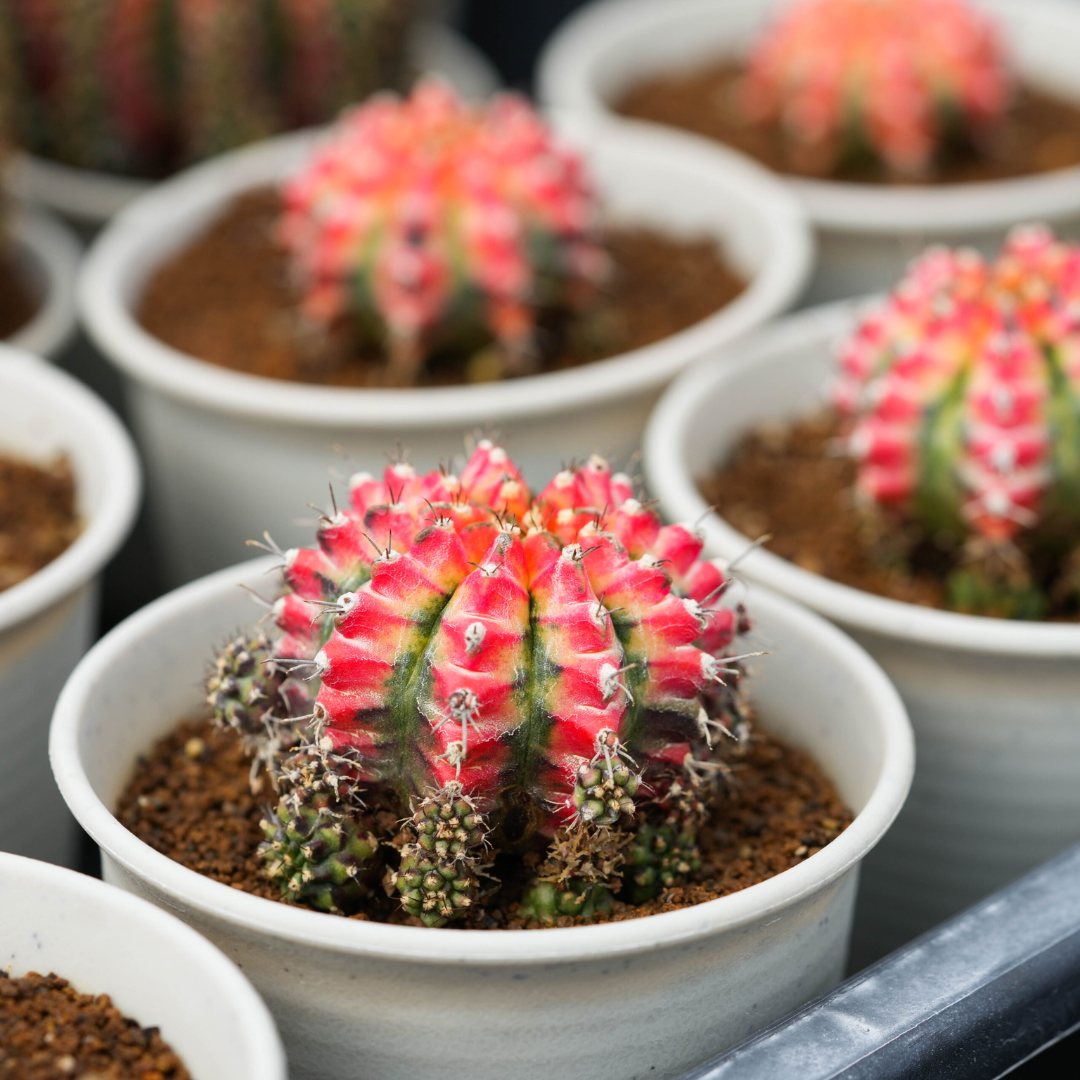
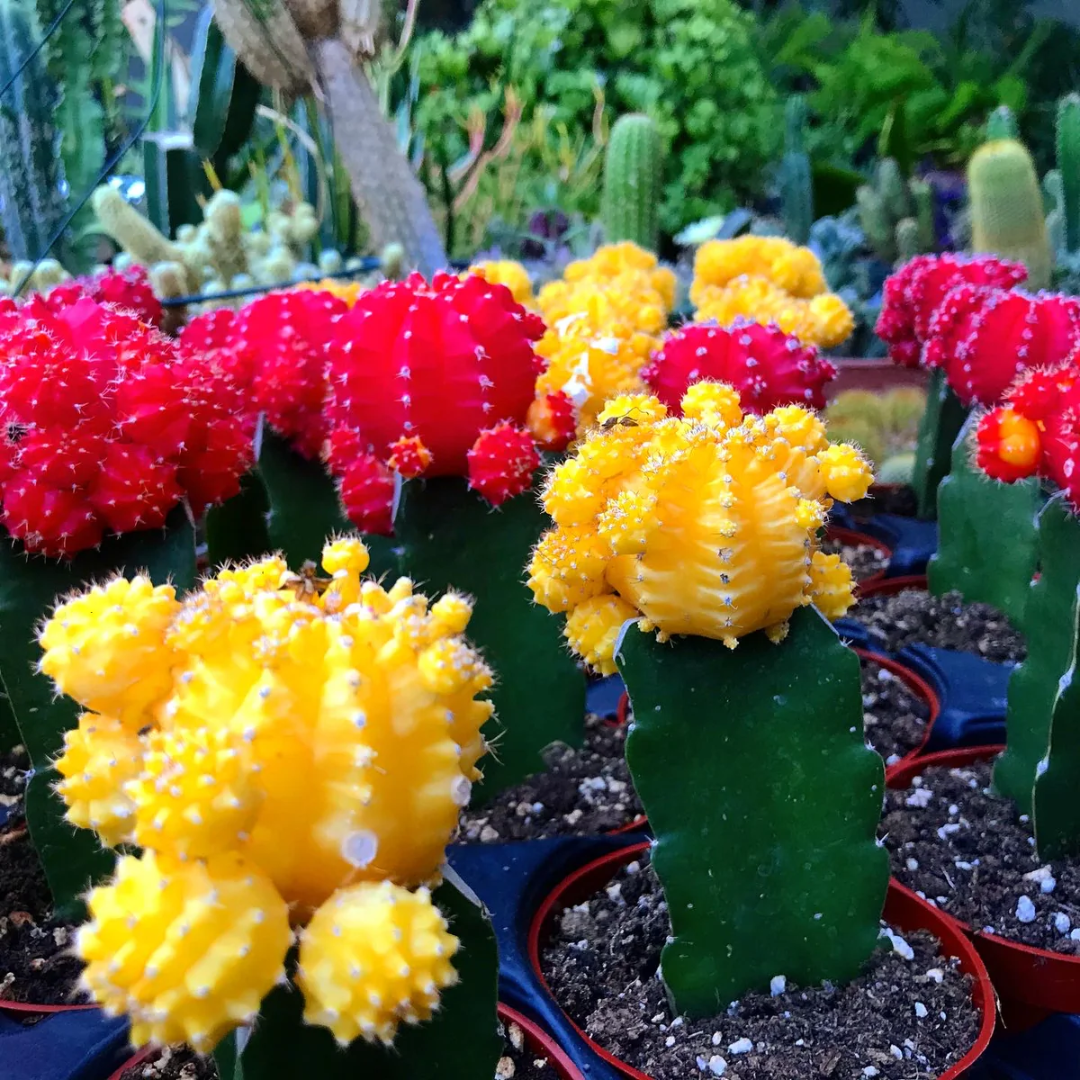
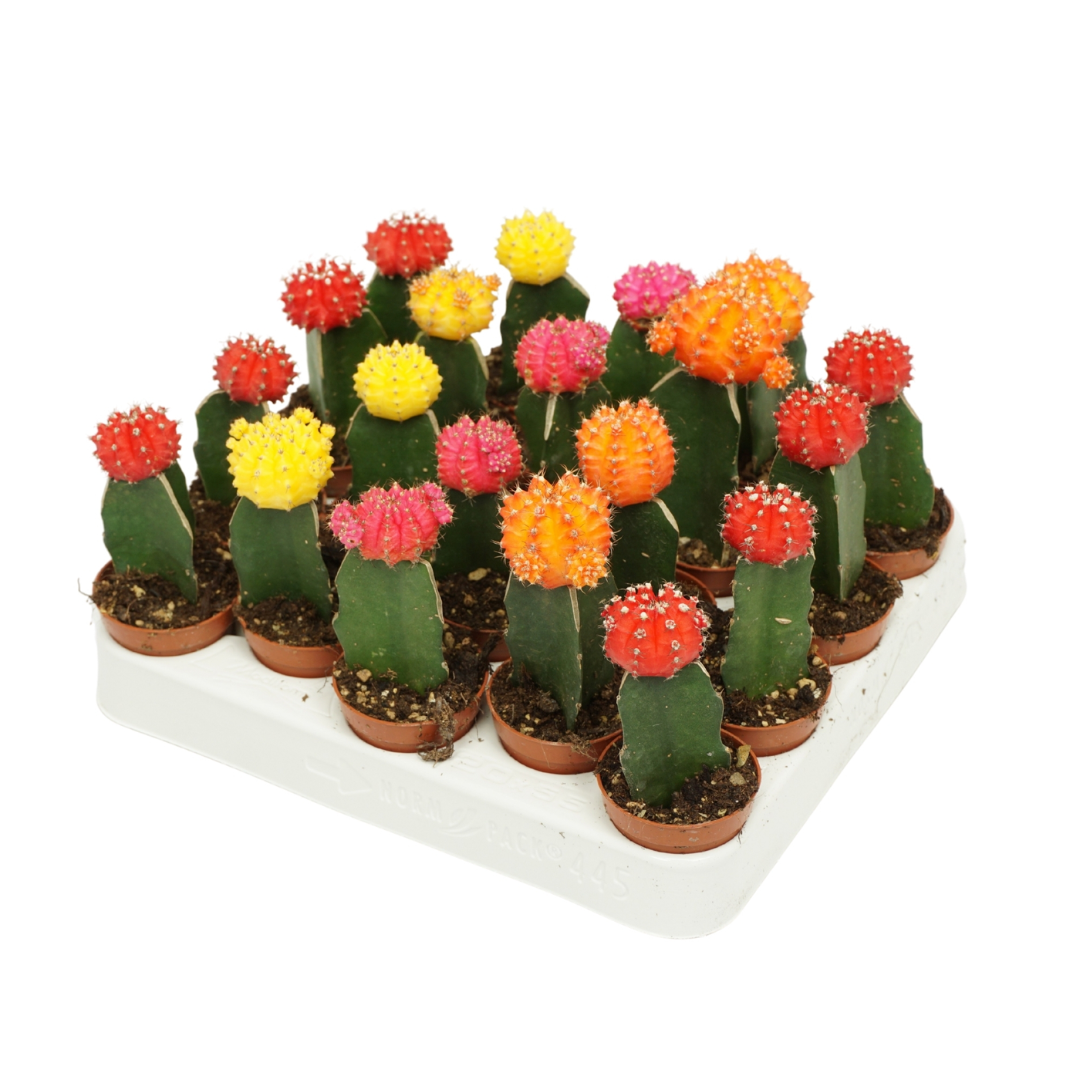
The Moon Cactus is a small, round cactus usually 2 to 5 centimeters in diameter with distinct ribs and tiny clusters of spines. Its upper body glows in brilliant tones of fiery red, sunset orange, golden yellow, and fuchsia pink, making it a living piece of art. When in bloom, it produces delicate, funnel-shaped white or light pink flowers that enhance its already mesmerizing appearance.
This colorful contrast between the bright top and the green rootstock makes it a true showstopper in any home or office décor.
Light Requirements
Moon Cactus thrives in bright, indirect sunlight. Too much direct sunlight can scorch its vivid top, while too little light can dull its colors. The ideal location is near a south or east-facing window, where it receives filtered daylight. If kept outdoors, choose a partially shaded spot early morning sun and afternoon shade work best.
If you notice the colors fading, try gradually increasing light exposure, but always avoid harsh midday rays.
Temperature & Humidity
Native to warm climates, Gymnocalycium mihanovichii prefers temperatures between 65°F and 80°F (18°C–27°C). It is sensitive to cold and should never be exposed to frost. During winter, keep it indoors at a stable room temperature above 55°F (13°C).
Humidity should remain low to moderate, as excessive moisture may cause rot.
Watering Needs
This cactus requires a careful balance when it comes to watering. During the growing season (spring to early autumn), water thoroughly only when the top inch of soil is dry. Always allow excess water to drain away, as standing moisture leads to root rot.
In winter, reduce watering to once every 3–4 weeks since the plant goes dormant. A good rule of thumb is to “soak and dry” water deeply, then let the soil dry completely before watering again.
Use room-temperature water, and avoid wetting the top colorful graft to prevent fungal issues.
Soil Mixture
Moon Cactus thrives best in well-draining cactus or succulent soil. A perfect mix can be made by combining:
- 2 parts cactus potting mix
- 1 part perlite or pumice
- 1 part coarse sand
This blend ensures aeration and prevents root rot. A terracotta pot with drainage holes is ideal, as it allows the soil to breathe and excess moisture to evaporate.
Fertilizer & Feeding
Feed your Moon Cactus every 4–6 weeks during spring and summer with a diluted, balanced cactus fertilizer (10-10-10). Over-fertilizing can cause the grafted top to weaken, so always use half-strength doses.
Avoid feeding in winter, as the plant rests during colder months.
Blooming & Growth
The Moon Cactus occasionally blooms with small, beautiful flowers usually in white, pink, or pale yellow during the warmer months. It’s not a heavy bloomer, but the flowers add extra charm to its already vibrant personality.
Growth remains slow and compact, making it a perfect choice for small pots, terrariums, or window displays.
Propagation
Because the colorful top lacks chlorophyll, it cannot survive on its own and must be grafted onto a green cactus. Propagation involves cutting a healthy top section (scion) and attaching it to a strong green cactus base (rootstock). Over time, the two fuse and grow as one. This fascinating process makes every Moon Cactus unique.
Care Tips & Maintenance
- Avoid overwatering the number one cause of Moon Cactus issues.
- Provide gentle, filtered sunlight to maintain bright colors.
- Wipe dust from the surface with a soft brush occasionally.
- Rotate the plant every few weeks for even growth.
- Repot every 2–3 years in fresh soil to ensure root health.
Symbolism & Appeal
The Moon Cactus symbolizes balance, color, and coexistence two cacti growing together in perfect harmony. Its vibrant appearance represents creativity, joy, and resilience, making it a popular gift for homes and offices. It’s also a great choice for beginners who want a low-maintenance yet visually stunning plant.
Note
The Gymnocalycium mihanovichii (Moon Cactus) is truly a masterpiece of nature a radiant combination of science, art, and life. Its fusion of vivid color, compact form, and minimal care makes it a delightful addition to any plant collection. Whether displayed on a windowsill, office desk, or decorative shelf, this cactus never fails to brighten its surroundings.
With a little light, love, and the right touch Fof care, your Moon Cactus will continue to glow beautifully a small, colorful reminder that life’s best beauty often grows in harmony.


Reviews
There are no reviews yet.