
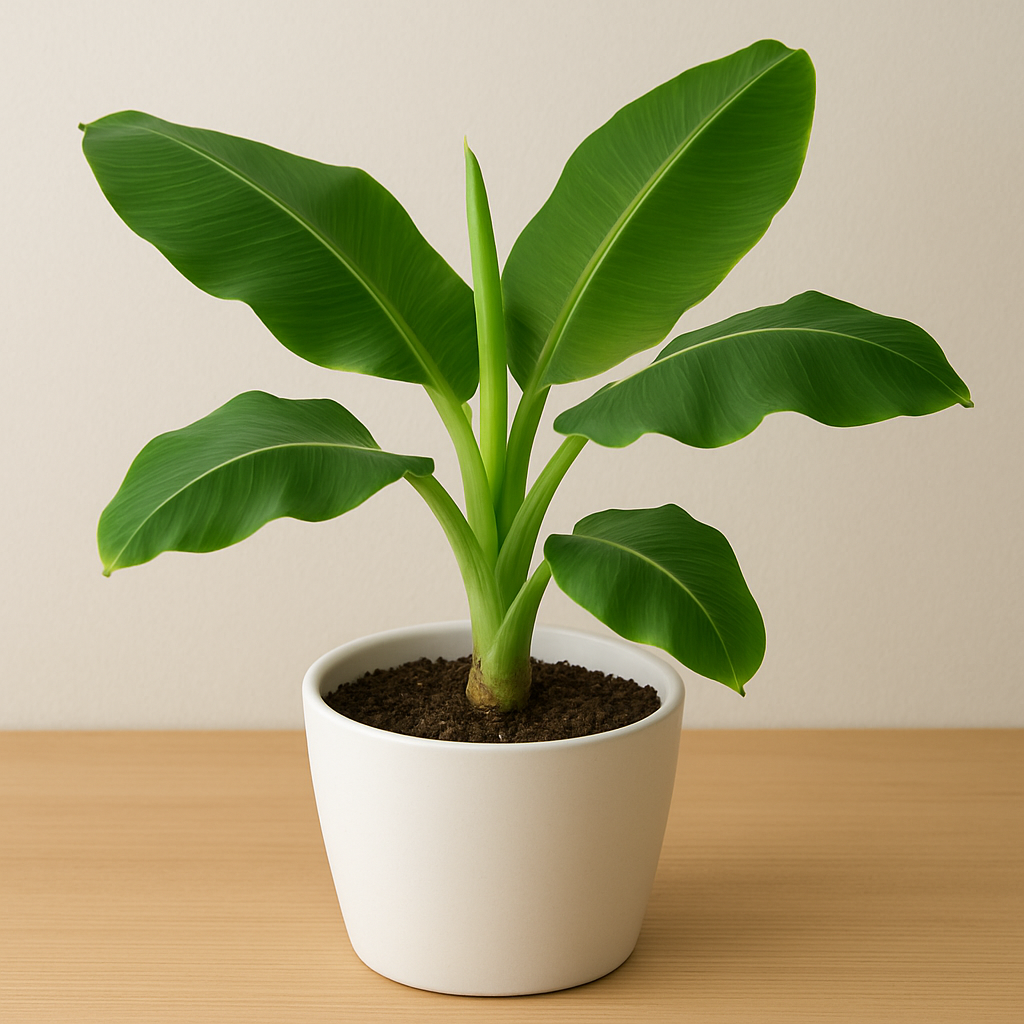
Your Guide to Growing a Banana Plant
Growing a banana plant (Musa spp.) brings a dramatic, tropical flair to your space, and with the right knowledge, it can be a surprisingly straightforward endeavor. Although many people refer to them as “trees,” bananas are actually giant herbaceous perennials; in fact, they lack woody tissue. As a result, this guide highlights the key steps to cultivate a healthy banana plant. Whether you want lush foliage or hope to harvest your own fruit, you will find all the essential information here.
Choosing Your Banana Plant
Success starts with selecting the right variety for your climate and goals. For fruit production in temperate regions, hardy, dwarf cultivars like ‘Dwarf Cavendish’ or ‘Rajapuri’ are excellent for containers and can be moved indoors. For pure ornamental impact, the striking red-leaved Musa sanguinea or the ultra-hardy Musa basjoo (Japanese fiber banana) make stunning landscape statements. Always source plants from reputable nurseries to ensure they are disease-free.
Perfect Placement: Sun, Soil, and Space
Banana plants are sun worshipers. They require full sun—at least six to eight hours of direct sunlight daily—to grow vigorously and produce fruit. They thrive in rich, well-draining soil with a slightly acidic to neutral pH. Amending garden soil or potting mix with generous amounts of compost or well-rotted manure is crucial. These plants are heavy feeders and drinkers, so ensure they have consistent moisture and room for their large root systems. Dwarf varieties need pots at least 18-24 inches in diameter.
Essential Care for Lush Growth
Consistent watering is non-negotiable; keep the soil consistently moist but never waterlogged. A deep layer of mulch helps retain moisture and regulate soil temperature. Feed your plant monthly during the growing season with a balanced, potassium-rich fertilizer (similar to what you’d use for tomatoes or palms) to support strong leaf and potential fruit development. Rotate container plants regularly for even growth.
Overcoming Winter and Common Issues
In cooler climates (below USDA zone 9), protection is key. Before frost, cut back the foliage and heavily mulch the base, or move containers to a frost-free, bright indoor location. Watch for pests like aphids and spider mites, which can be treated with insecticidal soap. The most common issue is overwatering, which leads to root rot ensure your pot or planting site has excellent drainage.


Reviews
There are no reviews yet.