
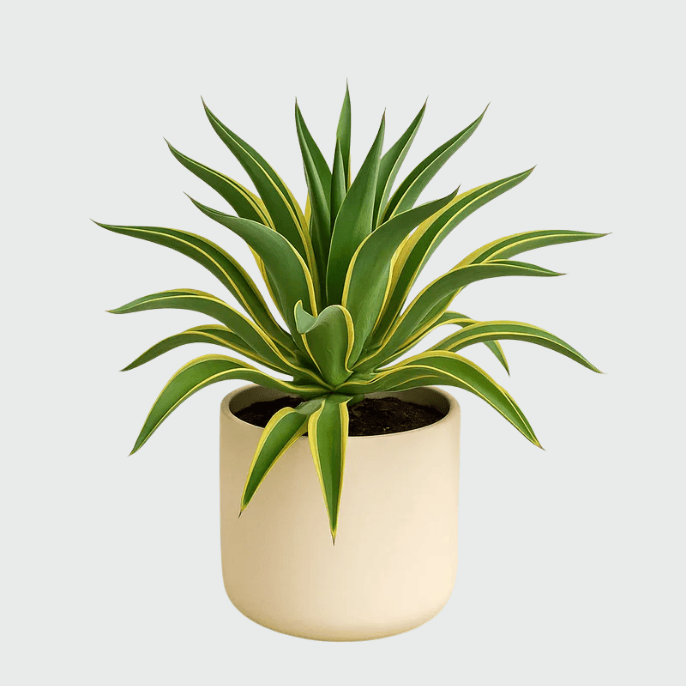
Introduction to Agave Plant
The Agave plant is a striking succulent because of its architectural form, drought tolerance, and versatility. Moreover, it thrives in both indoor and outdoor landscapes. With its rosette-shaped structure and thick, fleshy leaves, Agave has become a popular choice for gardeners seeking a hardy, low-maintenance plant. As a result, it adds bold character to any space, whether used as a focal point in a garden or as part of a decorative indoor arrangement.
Botanical Features
Agave plants are characterized by their sharp, pointed leaves that often display blue, green, or silver tones. Some varieties feature subtle striping or textured surfaces. As slow-growing succulents, they store water efficiently and thrive in arid or semi-arid environments. The plant’s rosette shape allows it to collect moisture and channel it toward its root system, a key adaptation for survival in desert climates.
Growing Conditions
Agaves prefer full sunlight and well-drained soil. Sandy or rocky soil mixes work best, as they prevent excess moisture from lingering around the roots. When grown in containers, choosing pots with proper drainage ensures healthy growth. Agave plants thrive in warm temperatures and tolerate heat remarkably well, making them ideal for xeriscaping and water-efficient garden designs.
Watering and Care
Watering should be infrequent, allowing the soil to dry completely between watering sessions. Overwatering is one of the most common issues, leading to root rot. Fertilizer is optional but can be applied lightly during the growing season to support leaf development. Removing dried or damaged leaves keeps the plant looking its best.
Varieties and Uses
There are many Agave varieties, ranging in size from compact tabletop species to large, dramatic landscape specimens. Some popular types include Agave americana, Agave attenuata, and Agave parryi. Beyond ornamental use, certain species are valued in traditional practices and are known for their strong fibers and sap. The plant also complements cacti, aloes, and other drought-tolerant species, making it a versatile addition to rock gardens, desert themes, and minimalistic décor.
Propagation
Agave plants often produce offsets, commonly called “pups,” around their base. These can be separated and replanted to grow new plants. This natural propagation method makes it easy to expand a collection or share with other plant enthusiasts.


Reviews
There are no reviews yet.