

Rubber plants are highly popular indoor plants known for their glossy, attractive leaves and low-maintenance nature. Rubber Plants Varieties Care and Growth mainly focus on types such as Robusta, Tineke, Burgundy, and Ruby, each displaying beautiful colors and foliage patterns. These plants thrive best in bright, indirect light and well-draining soil. Allow the top layer of soil to dry before watering to avoid root rot. Rubber plants prefer warm temperatures and moderate humidity, which support strong and healthy growth. Cleaning the leaves regularly and applying fertilizer occasionally encourages lush, vibrant foliage. With the right care, rubber plants grow gracefully indoors, enhancing both homes and office spaces.
What is Rubber Plant
A rubber plant is a popular indoor plant known for its large, glossy leaves and strong visual appeal. Scientifically called Ficus elastica, it originates from tropical regions of Southeast Asia. This plant grows upright and can reach impressive heights indoors with proper care. Rubber plants are valued for their air-purifying qualities, as they help remove toxins from indoor spaces. They thrive in bright, indirect light and require moderate watering. Due to their low-maintenance nature and elegant appearance, rubber plants are ideal for homes, offices, and modern interiors.
Types of Rubber plant
Rubber plants come in several attractive varieties, each offering unique leaf colors and patterns. The most common type is Ficus elastica Robusta, known for its large, deep green leaves and easy care. Ficus elastica Tineke features beautiful variegated leaves with green, cream, and soft pink shades. The Burgundy variety stands out with dark green leaves and rich reddish tones. Meanwhile, Ficus elastica Ruby displays striking pink, red, and cream colors, making it a highly decorative choice. These rubber plant types are popular for indoor spaces due to their beauty, durability, and low maintenance needs.
Popular Rubber Plant Varieties for Homes
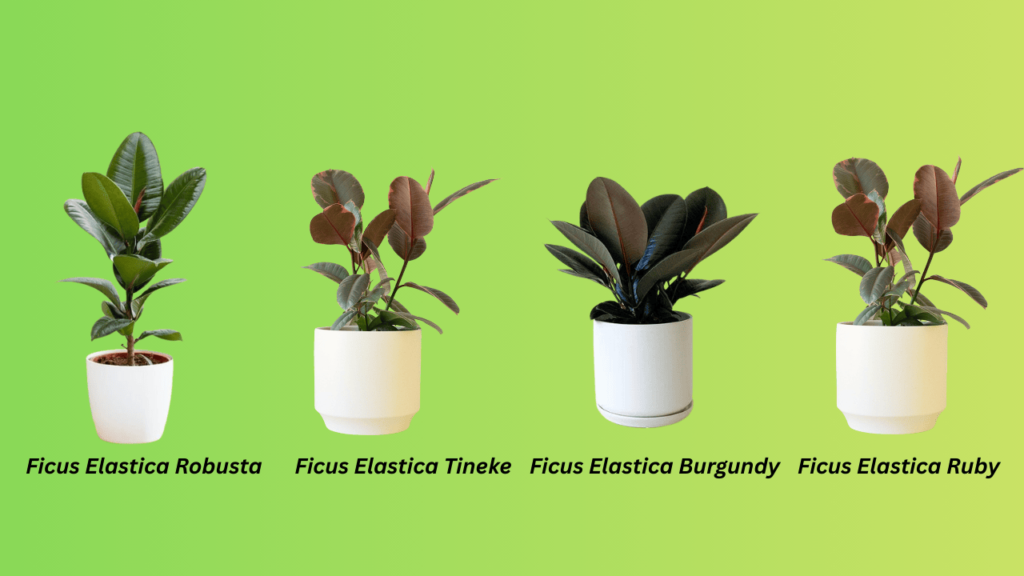
Rubber plants come in several stunning varieties. Each variety shows unique leaf color and growth patterns. Consequently, plant lovers enjoy collecting multiple types.
Ficus Elastica Robusta
Robusta features large, deep green, glossy leaves. It grows fast and tolerates low light well. Hence, it suits busy plant owners perfectly.
Ficus Elastica Tineke
Tineke displays cream, green, and soft pink variegation. Its colorful foliage brightens minimal interiors instantly. However, it prefers brighter indirect light for best color.
Ficus Elastica Burgundy
Burgundy offers dark green leaves with red undertones. It creates a dramatic look in modern spaces. Therefore, designers often recommend this variety.
Ficus Elastica Ruby
Ruby showcases pink, red, and cream tones beautifully. It stands out as a decorative statement plant. As a result, it remains popular among collectors.
Ideal Light Conditions for Rubber Plants
Rubber plants thrive in bright, indirect sunlight. Direct sun may burn leaves quickly. However, low light slows growth noticeably. Therefore, place plants near filtered windows. Rotate plants often to ensure even growth.
Best Soil and Potting Requirements
Well-draining soil ensures healthy rubber plant roots. Use a mix with peat, perlite, and compost. Additionally, choose pots with proper drainage holes. Report every two years for steady growth. Fresh soil also improves nutrient absorption.
Watering Schedule for Healthy Growth
Water rubber plants only when topsoil dries. Over watering leads to root rot problems. Therefore, always check soil moisture first. Reduce watering during winter months. Consistent watering supports glossy leaves.
Humidity and Temperature Needs
Rubber plants enjoy moderate indoor humidity. Occasional misting keeps leaves fresh. They grow best between 18°C and 27°C. Avoid cold drafts and sudden temperature changes. Stable conditions encourage strong growth.
Fertilizing Rubber Plants Properly
Feed rubber plants during spring and summer. Use balanced liquid fertilizer monthly. However, avoid over-fertilizing sensitive roots. Pause feeding during colder seasons. Regular feeding boosts leaf size and color.
Pruning and Maintenance Tips
Pruning helps control height and shape. Cut stems above leaf nodes carefully. Always use clean, sharp tools. Wipe leaves regularly to remove dust. Clean leaves improve photosynthesis efficiency.
Common Rubber Plant Problems and Solutions
Yellow leaves often signal overwatering issues. Brown edges indicate low humidity or stress. Pests like spider mites may appear occasionally. Therefore, inspect plants weekly. Treat pests quickly using neem oil.
Benefits of Growing Rubber Plants Indoors
Rubber plants purify indoor air naturally. They reduce toxins and improve oxygen levels. Additionally, they enhance mental well-being. Green plants also reduce stress effectively. Thus, rubber plants improve overall living quality.
Styling Rubber Plants in Interior Spaces
Rubber plants suit minimalist and modern decor. Use ceramic or matte pots for elegance. Place them in corners for visual balance. Additionally, group plants for layered depth. Good styling highlights their bold foliage.
Why Buy Rubber Plants from Hani Plants
Hani Plants offers premium, healthy rubber plants. Each plant receives expert care before delivery. Moreover, they provide multiple varieties under one roof. Customers enjoy reliable quality and strong roots. Therefore, Hani Plants remain a trusted choice.
Conclusion:
Rubber plants combine beauty with easy maintenance. They reward care with lush, glossy leaves. With proper light, water, and soil, growth thrives. Additionally, choosing quality plants ensures long success. Buy from Hani Plants for lasting indoor greenery.

Johnny Kartakov
One useful clarification for the air-purifying section: rubber plants can remove some volatile compounds in sealed test chambers, but that result does not translate to a few plants cleaning a normal room at the same rate. Homes exchange much more air through doors, windows, fans, and leaks than leaves and potting mix can process.
Rubber plants are still worthwhile indoor plants for their structure and foliage, but they should not replace ventilation or fixing a pollution source. Choose one for the light and care conditions it needs: bright indirect light, a draining pot, and watering after the upper mix has dried. If leaves yellow, check root-zone moisture and drainage before assuming the plant needs more water or fertilizer.
I work on KnowYourPlant, and this guide explains what the chamber studies measured and how to choose plants for realistic indoor conditions: https://knowyourplant.app/blog/posts/air-purifying-plants-indoor/
Hanan
Thanks, I need Free Backlink in Your website.